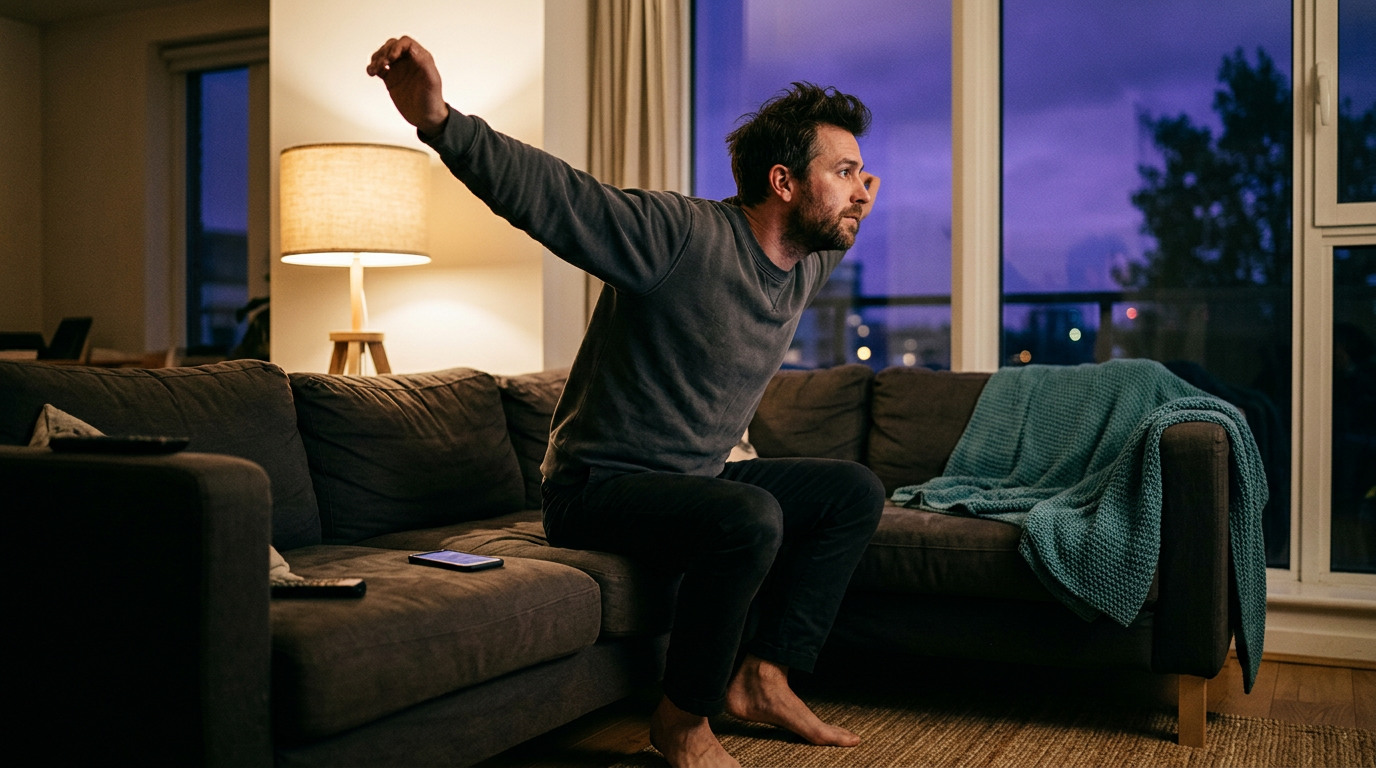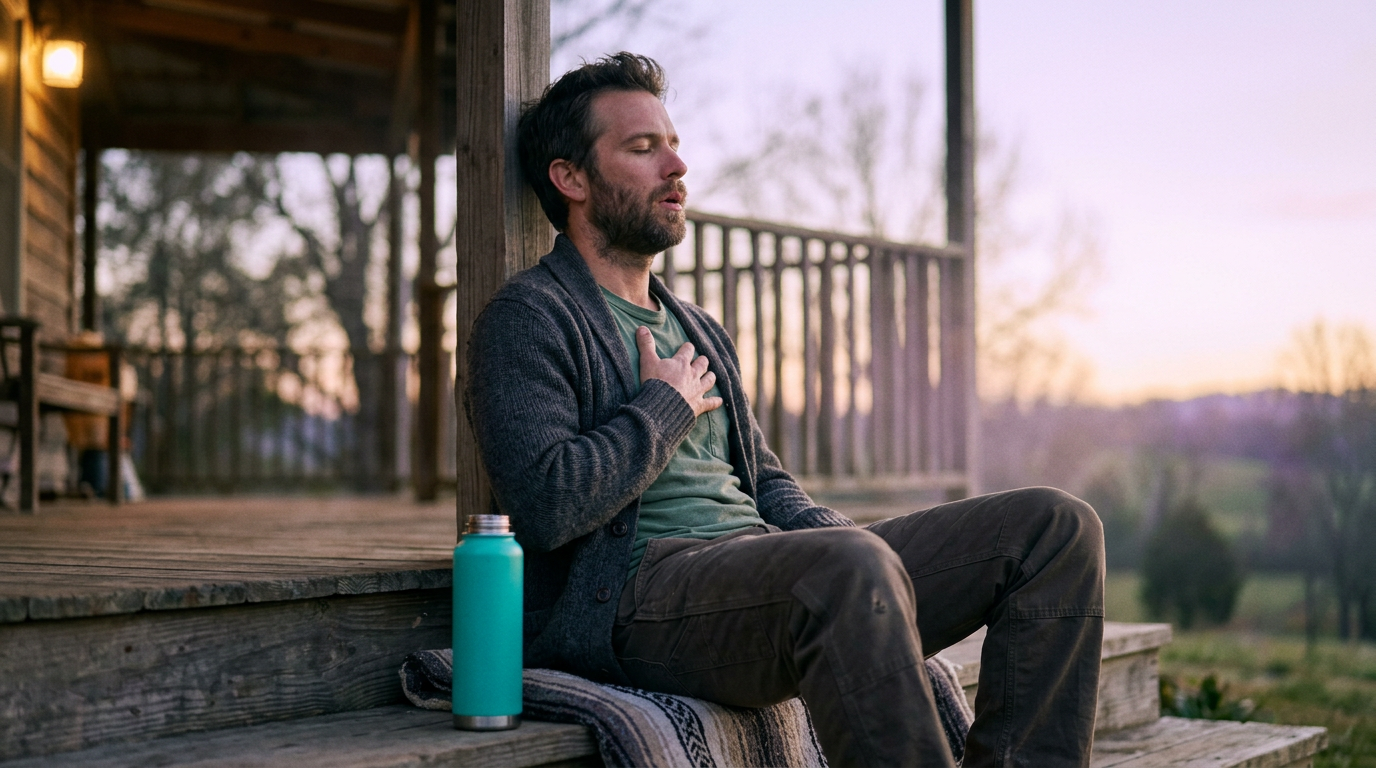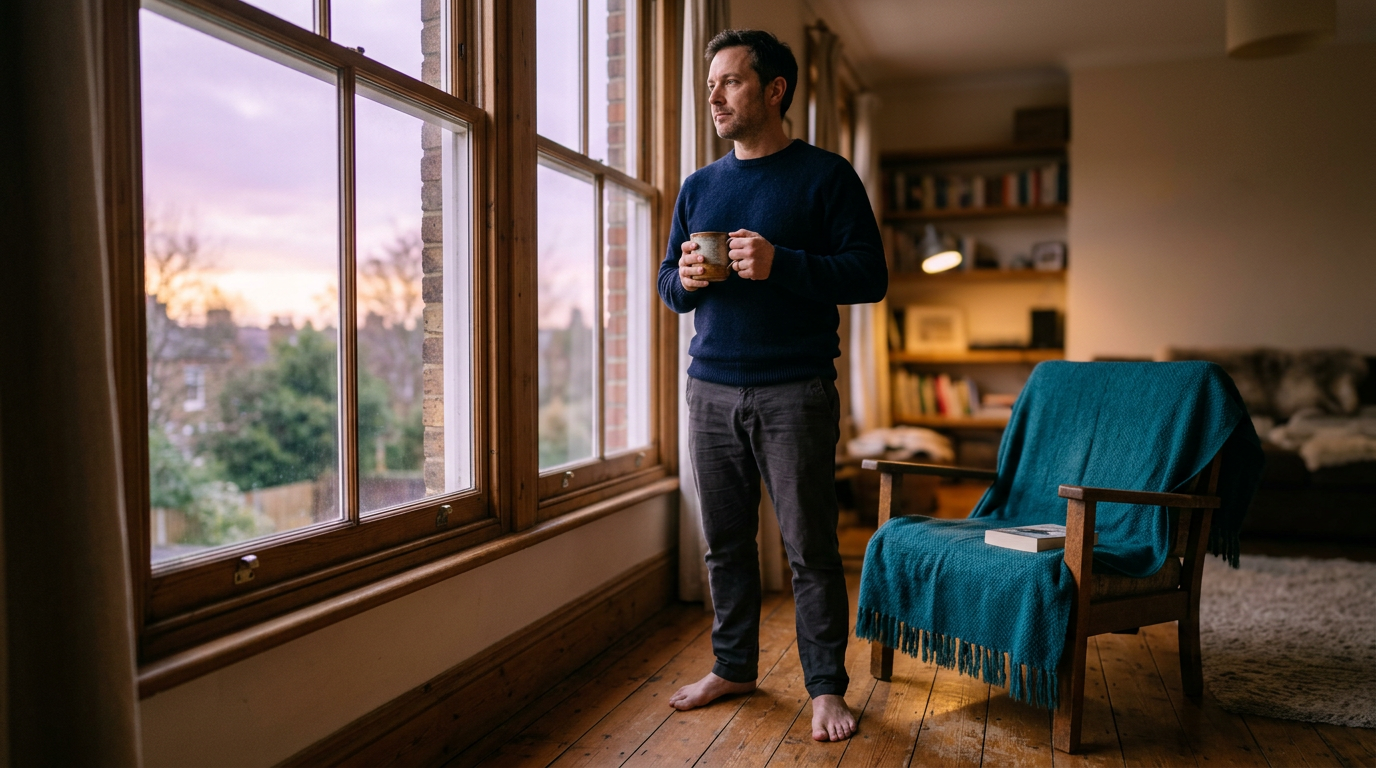
The email lands, your stomach drops, and suddenly you are three catastrophes deep into a future that has not happened. Or it is 2 a.m., the house is silent, and your mind is replaying a conversation from 2019. Everyone knows the feeling of being dragged out of the present by their own thoughts. Grounding techniques are the way back. They anchor your attention to what your senses can actually verify right now, this room, this chair, this breath, and in doing so they interrupt the spiral at its power source. This guide covers the methods that work, why they work, and how to reach for them in the exact moments your mind runs ahead of you.
What are grounding techniques?
Grounding techniques are simple practices that pull your attention out of anxious thought and into present sensory experience. They use your five senses, your body, or a small mental task as an anchor. Most take under two minutes, require nothing you do not already carry, and work anywhere.
They come in three broad families. Sensory grounding turns you outward: naming what you can see, touching a textured surface, holding something cold. Physical grounding turns you into the body: pressing your feet into the floor, rolling your shoulders, feeling the chair take your weight. Cognitive grounding gives your mind a small structured job: counting backward from one hundred by sevens, naming every green object in the room, listing bands in alphabetical order. The Cleveland Clinic catalogs thirteen variations in its guide to grounding techniques, and every one of them is a version of the same move: attention, redirected to the verifiable present.
Why does grounding work when your thoughts spiral?
Your attention is a narrow channel, and a spiral needs that channel to keep running. Grounding floods it with present tense sensory input instead. At the same time, signals of safety from the body, steady feet, slow breath, relaxed hands, tell your nervous system the emergency it was preparing for has been called off.
Anxious thought lives in prediction. The body, meanwhile, only ever lives now, which makes it the most reliable doorway out of an imagined future. Harvard Health's explainer on the stress response describes how perceived threat mobilizes the whole system within moments; grounding works the same circuitry in reverse, feeding back evidence of safety until the alarm quiets. This body first route is the same principle behind somatic exercises and the broader practice of nervous system regulation, and it explains a strange truth about spirals: you can rarely think your way out of one, but you can almost always sense your way out.
How do you use the 5-4-3-2-1 method?
Look around and name five things you can see, four things you can touch, three things you can hear, two things you can smell, and one thing you can taste. Move slowly, let each item register, and breathe normally as you go. One full round takes about two minutes.
A few refinements make it stronger.
Say the items in your head with detail. A blue mug with a chipped rim beats a mug. Specificity is what occupies the channel.
Actually touch the four touch items. The seam of your jeans, the cool desk, the ridges of a key. Texture is louder than sight.
Let sounds arrive in layers. The obvious hum first, then the fainter ones behind it. Listening for the quietest sound in the room is its own small meditation.
Finish with one slow breath. The count opens the door; a long exhale walks you through it.
If you blank on smells or tastes, name the last ones you remember. The structure matters more than the inventory.
Choose your family of technique by the situation. Sensory methods shine when the world around you is rich and safe. Physical methods win when you need to stay engaged in a conversation while your insides settle. Cognitive methods, the counting and categories, suit the moments when sensation itself feels overwhelming and your mind wants a task with edges. Most people discover one favorite from each family and rotate among them the way a carpenter reaches for different tools.
Which grounding techniques work fastest in public?
Press both feet flat into the floor and feel the ground push back. Press your palms together hard for five seconds, then release. Hold a cold glass or press a thumbnail gently into your fingertip. Name every object of one color around you. All of these are invisible to the people beside you.
Discretion matters because spirals rarely schedule themselves for private moments. They arrive in meetings, on trains, in the checkout line, at dinner with your in-laws. The feet technique deserves special praise here: nobody has ever been caught grounding through their shoes. Pair it with a slow, quiet exhale and you have a full reset that fits inside a conversation. For spikes that need a stronger lever, the breath itself becomes the tool, and the four count square of box breathing runs silently behind any composed face.
How do you ground yourself at night?
In bed, switch from sight to touch and sound. Feel the full length of your body against the mattress, the weight of the blanket, the temperature of the pillow. Listen for the furthest sound outside the room, then the nearest one inside it. Let each sense land slowly, without rushing anywhere.
Night spirals feel different because the dark removes your visual anchors and the silence turns thought volume up. The answer is to lean into the senses that remain. A body scan from toes to forehead gives your attention a slow track to follow, and counting your exhales from ten down to one adds gentle structure. If your nights regularly dissolve into replay and rehearsal, our guide to calming racing thoughts at night builds a fuller toolkit, and yoga nidra offers a guided version of the same descent.
When is grounding a signal to get more support?
Grounding is first aid, and first aid has limits. If spirals arrive most days, if panic regularly overrides every technique, or if flashbacks and dissociation pull you out of the present, those are signs the pattern deserves professional care beyond self management alone.
This matters to say clearly, because capable people often treat coping skills as a test they keep failing. A nervous system that has carried real weight sometimes needs a trained guide to unload it, and working with a therapist on trauma or an anxiety disorder is the same act as seeing a physiotherapist for a torn muscle. Grounding still helps along the way. It simply works best as a bridge to support, and using it that way is wisdom, never weakness.
Where does grounding fit in a mental longevity practice?
Grounding trains the fastest version of regulation: the ability to return to the present on demand. Practiced over years, that return path becomes wide and familiar, which protects your attention, your sleep, and your relationships from the daily weather of a stressful life.
Mental longevity is the lifelong capacity to think clearly, regulate your inner state, adapt to change, keep learning, maintain meaningful connections, and live intentionally. A mind that can find the ground under any weather is the foundation the rest is built on. Grounding also compounds: every rep teaches your nervous system that spirals end, which quietly shrinks the next one. Start with the wider map in what mental longevity means, and see how present moment skills connect to everything else you are building. And because skills stick better in company, members inside HumanOS, our community for building a durable mind, practice these returns together and compare what actually works on hard days.
Is grounding the same as mindfulness?
They are close relatives with different jobs. Mindfulness is a broad training of attention, usually practiced on a schedule, as covered in the research summarized by NCCIH. Grounding is mindfulness deployed as an emergency tool, reached for in the moment your thoughts run away with you.
Do grounding techniques help with panic attacks?
They can shorten the tail of one and make the wave feel survivable, especially paired with slow exhales. During intense panic, expect grounding to steady you while the wave passes; the alarm itself can take several minutes to stand down fully. If panic attacks recur, bring a clinician into the picture; effective treatment exists and works.
How often should I practice grounding?
Once a day in calm moments, for about a minute, is plenty. Rehearsal is what makes the technique available under fire. Running 5-4-3-2-1 while waiting for coffee builds the reflex cheaply, so the skill is warm when a hard moment actually arrives.
Does holding ice or cold water really work?
Cold is one of the strongest sensory anchors available. A cold glass, cool water over the wrists, or a splash on the face gives your nervous system a signal too loud to ignore, and the dive reflex triggered by cool water on the face can slow your heart rate directly.