You sit down to do one important thing. Forty minutes later you have answered two messages, checked a delivery status, skimmed a headline about a country you will never visit, and the important thing sits exactly where you left it. This is the modern condition, and it has less to do with your discipline than you think. Every app on your phone employs teams whose job is interrupting you profitably. Learning how to focus better in that environment is a design problem first and a willpower problem second, which is genuinely good news: design responds to changes you can make this afternoon. This guide covers the environment, the session structure, and the daily inputs that let a normal brain do deep work in a distracted world.
Why is focusing so hard right now?
Because your attention is the product. Feeds, badges, and notifications are engineered to interrupt, and every interruption charges a switching cost: your mind needs minutes to fully return to a demanding task. Stack enough interruptions and a day becomes shallow by design, without a single bad decision from you.
The research on switching is sobering. The well known Stanford study of heavy media multitaskers in PNAS found that people who constantly juggle streams perform worse at filtering distractions and switching cleanly between tasks. Practice fragmenting, and you get better at fragmenting. The hopeful reading hides inside the same finding: attention is trainable, and it trains toward whatever you rehearse. Rehearse sustained blocks and the capacity rebuilds, a process our guide to increasing your attention span walks through week by week.
What does single tasking actually look like?
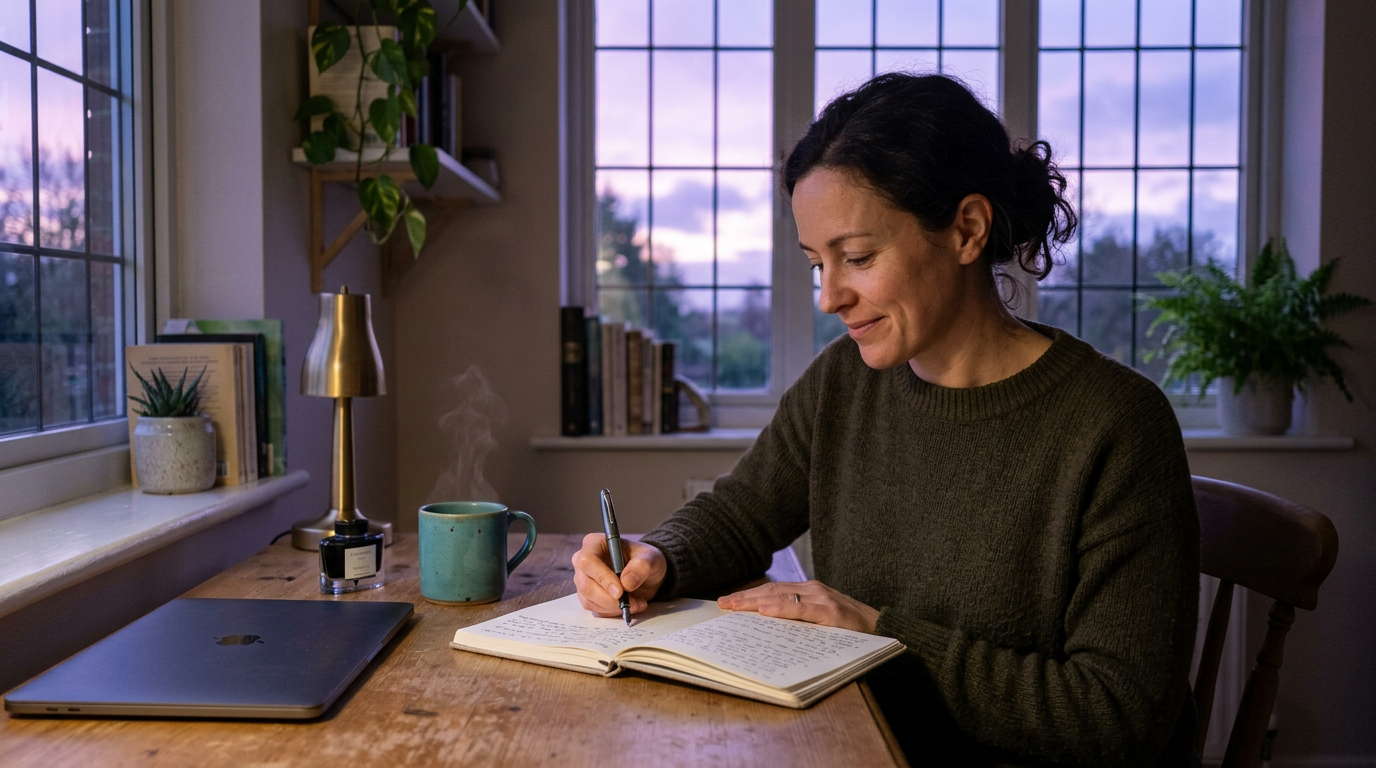
One task, named out loud or written down, with everything unrelated out of sight: one document open, one browser tab, phone in another room, and a clear finish line for the block. Single tasking is a physical arrangement you can see, far more than a mental state you summon.
The naming step does quiet work. Write the next fifty minutes are for the proposal draft on a sticky note and the ambient question of what should I be doing loses its grip, because it has been answered in ink. Keep a capture pad beside you for everything else that surfaces, the email you suddenly remember, the thing you need to buy, and park each one in a single line instead of acting on it. Research on offloading, like the bedtime to do list study in Journal of Experimental Psychology, shows that writing tasks down releases the mind from rehearsing them. The pad holds the loop so your head can hold the work.
How do you design an environment that protects focus?
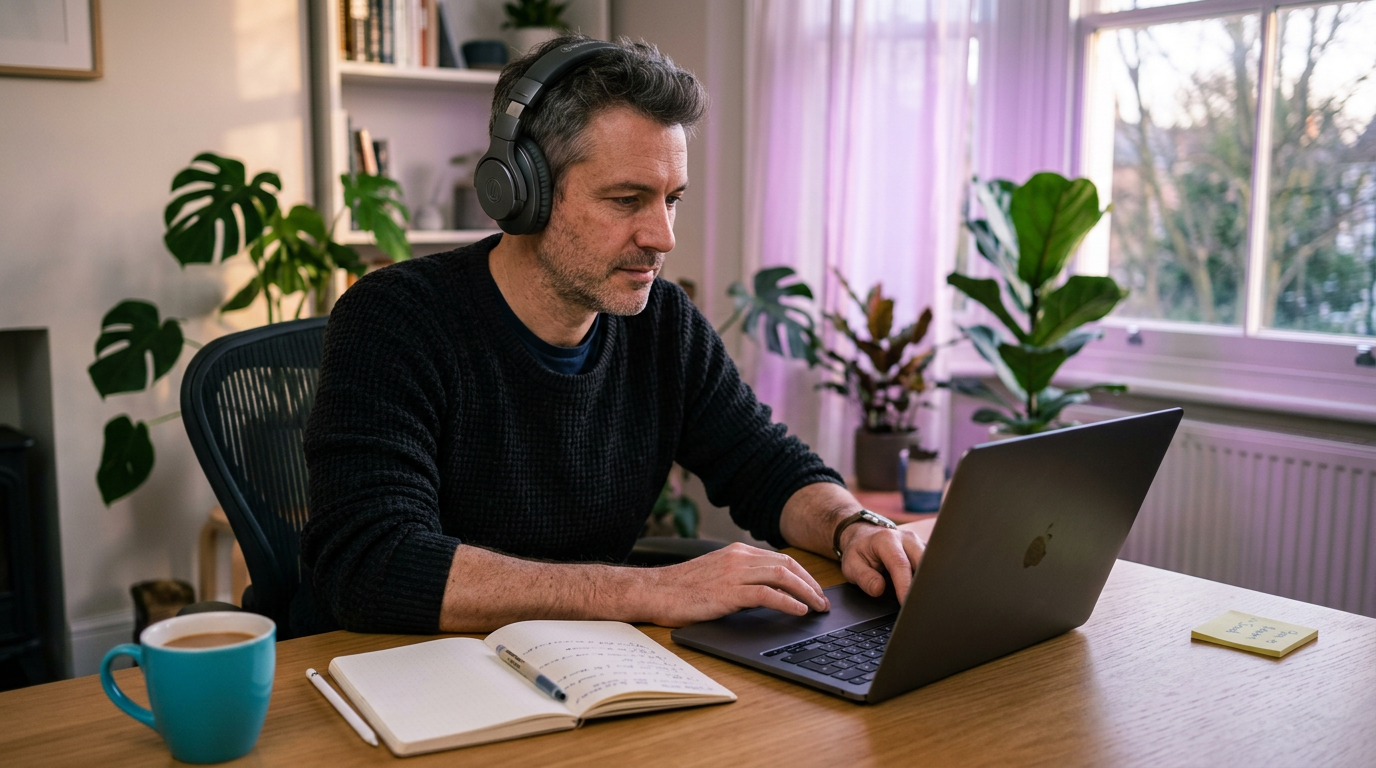
Move the phone to another room, turn notifications off by default and allow back only the few that matter, close every app you can see, and give your work one dedicated cue: a specific desk state, a playlist, or headphones. Distance and friction do the guarding your willpower was failing at.
The other room detail earns its reputation. A silenced phone on the desk still pulls attention, because part of you tracks it the way you track a ringing kettle. Physical distance ends the negotiation. If the phone must stay near you for on call reasons, put it face down in a drawer and allow calls from the three people who genuinely need you; the difference between reachable for emergencies and available to every app is the difference between a fire alarm and a doorbell that never stops. Sound is the second lever: steady background audio masks the unpredictable noises that yank attention sideways, and our guide to brown noise for focus covers why so many people work better inside it. The deeper principle is cues. A brain that meets the same signals, same seat, same sound, same open document, drops into work faster each time, which is the same environmental logic explored in deep work.
How do focus sessions actually work?
Pick a block, twenty five or fifty minutes, start it with a tiny ritual, work on the one named task, and take a real break when the timer ends: stand, look far away, move. Sessions turn focus from a vague aspiration into a repeatable unit you can stack.
The ritual can be almost nothing, a breath, headphones on, timer started, and it still works, because rituals tell the nervous system what is about to happen. The break is load bearing: staying in the chair scrolling teaches your brain that focus ends in candy, while standing and letting your eyes rest teaches it that focus ends in recovery. Expect the first sessions to feel scratchy, and expect day three to feel worse than day one, because that is when the novelty wears off and the real training begins. Focus stamina behaves like running stamina, and nobody starts with a marathon. Two honest blocks a day, protected and repeated, will move more real work than eight fragmented hours, and they compound into the identity shift covered in identity based change: you stop trying to focus and start being a person who works in blocks.
What do you do when your mind wanders anyway?
Notice, name it quietly, wandering, and walk attention back to the task without the lecture. The return is the repetition that builds the muscle, so a session with thirty returns was thirty reps, and calling it a failure gets the arithmetic exactly backward.
Minds wander by design; the skill is the noticing. That noticing layer, watching your own attention like a kind coach instead of a disappointed teacher, is called metacognition, and it strengthens with use, as our guide to metacognition explains. Formal practice helps too. A few minutes of daily meditation is attention training in its purest form, sit, focus, wander, return, and the evidence for it is summarized honestly by NCCIH. If your wandering leans toward worry loops, meditation for overthinking meets that specific pattern where it lives.
How does the rest of your life feed tomorrow's focus?
Focus is downstream of sleep, movement, and stimulation load. A short night shrinks working memory and lengthens every task. A body that never moves keeps arousal stuck. A feed soaked evening trains the switching reflex you spend the next morning fighting. Guard the inputs and the output improves on its own.
Sleep deserves first place: even one rough night measurably dulls attention, and a run of them makes deep work feel like wading. Our guide to falling asleep fast covers the wind down that protects tomorrow's blocks. Movement is the cheapest focus drug available, a brisk twenty minute walk clears more mental fog than a third coffee. And stimulation load responds to periodic resets: the structured breaks described in what a dopamine detox actually changes quiet the reach reflex that fragments mornings. None of this requires perfection. It requires noticing that focus starts the evening before.
Where does focus fit in a mental longevity practice?
Clear thinking is the first capacity on the mental longevity list, and focus is its daily expression. A mind that can hold one thread for an hour learns faster, works with less strain, and is present enough to actually meet the people it loves. Those hours accumulate into a life.
Mental longevity is the lifelong capacity to think clearly, regulate your inner state, adapt to change, keep learning, maintain meaningful connections, and live intentionally. Focus threads through every clause of that sentence, because attention is the currency each one spends. The practices here, environment design, sessions, gentle returns, protected sleep, are small individually and formidable together, and they connect to the wider map in what mental longevity means. If you want the accountability that makes practice stick, members inside HumanOS, our community for building a durable mind, run shared focus blocks and compare what protects their attention in real weeks, with real jobs and real kids.
Is multitasking always bad?
Pairing a podcast with folding laundry costs nothing. The expensive version is combining two tasks that each need working memory, like writing while monitoring a chat. For anything cognitively demanding, sequential beats simultaneous every time, and the switching research shows the cost lands on both tasks.
How long should a focus session be?
Start at twenty five minutes and grow toward fifty as the stamina returns. The right length ends slightly before your quality collapses. Two or three strong blocks make an excellent day; the goal is repeatable depth, and marathon sessions usually borrow from tomorrow.
Does music help or hurt focus?
It depends on the work and the music. Lyrics compete with language tasks, so writing usually wants instrumental sound or steady noise. Familiar, low drama audio works better than novelty. Treat it as an experiment for a week and let your drafts, code, or notes cast the deciding vote.
Can focus be rebuilt at any age?
Yes. Attention responds to training across the lifespan, the same way strength does, and the combination of protected blocks, daily practice, and decent sleep rebuilds it reliably. Most people feel the difference within two to three weeks of consistent sessions, well before the habit even feels natural.