The old story said the adult brain was finished. You got your neurons, you spent them slowly, and whatever you had at twenty five was what you carried to the end. That story turned out to be wrong in the most useful way possible. Adult brains rewire constantly in response to what they are asked to do, which means the question stops being whether your brain can change and becomes what you are asking it to change into. Neuroplasticity exercises are simply the activities that ask well: demanding, novel, repeated, and specific enough that your brain has to build something new to meet them.
What are neuroplasticity exercises?
Neuroplasticity exercises are activities that push your brain to build new connections by making it do something genuinely unfamiliar and moderately difficult. Learning an instrument, a language, a complex physical skill, or a memory technique all qualify. What they share is novelty, difficulty, and enough repetition for the change to consolidate.
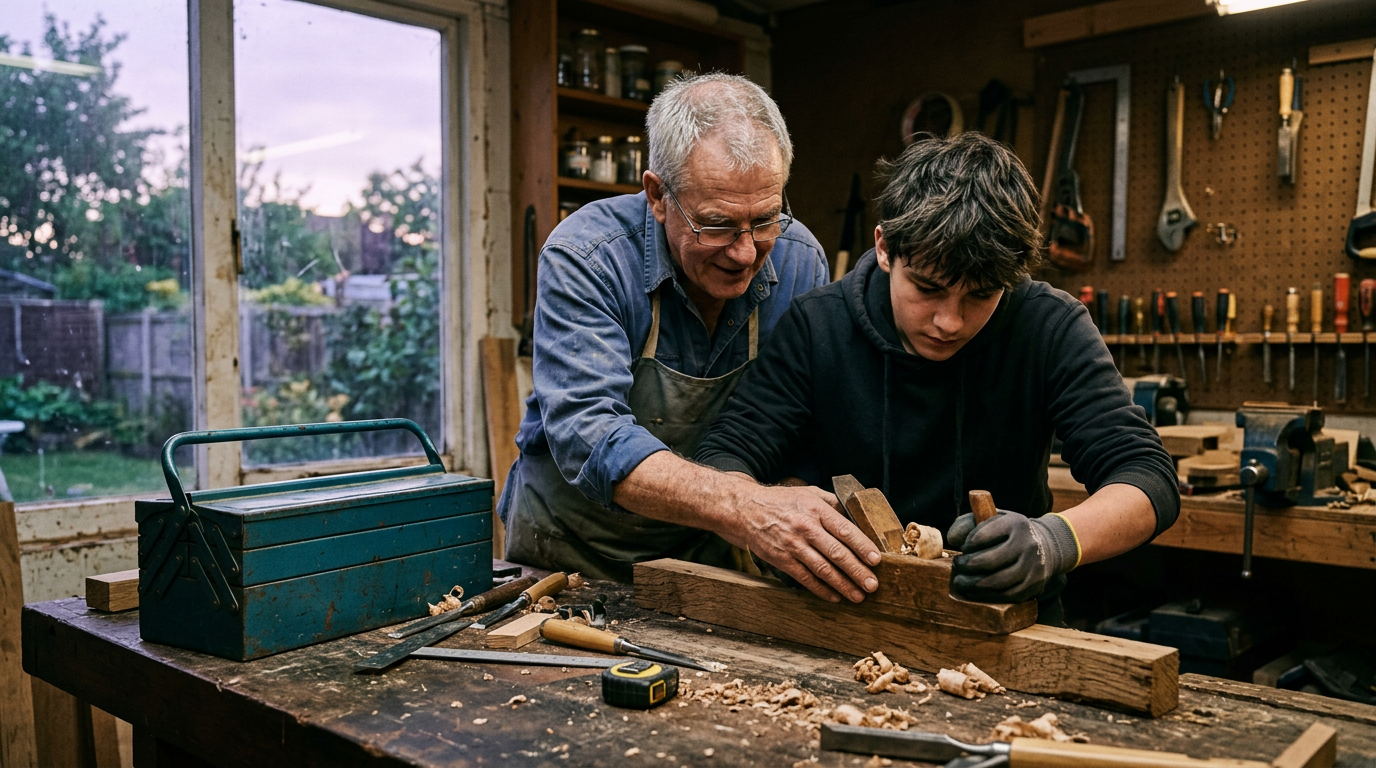
The category is broader and plainer than the phrase suggests. There is no special class of brain exercise sold separately from ordinary life. The activities that drive rewiring are the ones humans have always found demanding: mastering a craft, holding a conversation in a second language, learning to move your body in a new way, memorizing something that resists memorization.
What disqualifies an activity is familiarity. Doing a crossword you find easy, or the work you have done competently for eleven years, keeps existing circuits warm without asking for anything new. Comfort is the enemy of plasticity, which is inconvenient, since comfort is also what most of us optimize our days toward.
What is neuroplasticity actually?
Neuroplasticity is your brain's ability to reorganize itself by strengthening, weakening, and forming connections between neurons in response to experience. It runs constantly and quietly, and it responds most strongly to activities that are new, effortful, and repeated over weeks.
The mechanism is less mysterious than the word implies. Connections that fire together repeatedly get physically reinforced. Connections that go unused weaken. Your brain is continuously reallocating resources toward whatever you actually spend time doing, which is a wonderful property and a slightly alarming one, since it applies to scrolling exactly as faithfully as it applies to violin practice.
The evidence that adult brains reorganize at a network level is now direct. In a 2017 study published in Neuron, researchers trained people with no memory competition background for six weeks, using thirty minute sessions. Their memory performance improved substantially against control groups, gains persisted at a four month follow up, and their brain connectivity patterns shifted toward those of elite memory athletes. Six weeks of deliberate practice measurably reorganized functional networks in ordinary adults.
Which activities genuinely drive rewiring?
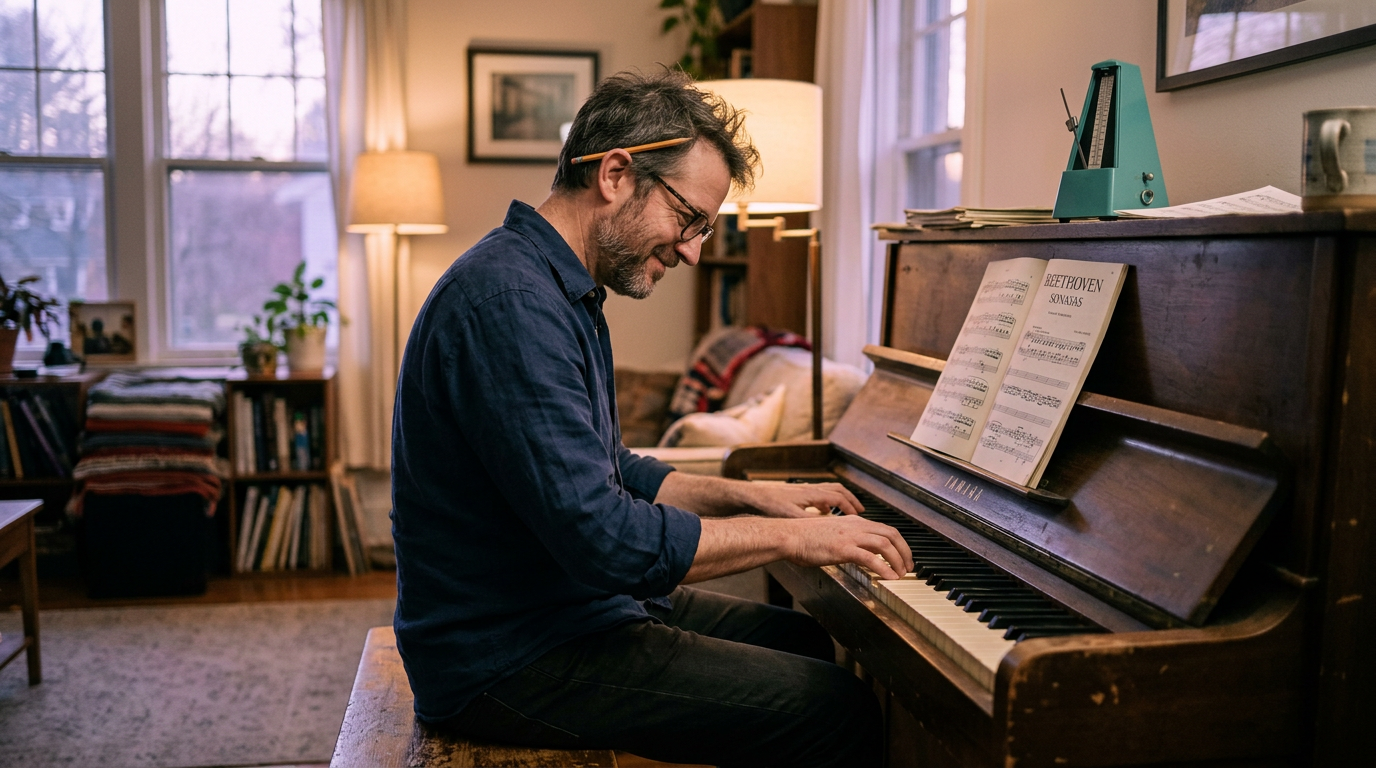
Learning a musical instrument, acquiring a new language, complex physical skills like dance or climbing, memory techniques, and any craft with a real learning curve. The common thread is that each one is difficult at first, improves with practice, and cannot be done on autopilot even after months.
Music earns its reputation because it demands several systems at once: motor control, listening, timing, reading, and emotional expression, all coordinated in real time. Languages demand sustained work against constant small failures, which is exactly the condition plasticity responds to. Complex movement adds spatial and balance demands that pure desk learning never touches.
Memory techniques deserve a place on this list because the evidence for them is unusually direct, and because they compound: the practice rewires while also giving you a tool you keep. Our guide to memory techniques covers the methods and the training protocol that produced those measurable changes.
One quiet contender belongs here too. Genuinely demanding conversation, the kind where you are arguing carefully with someone who disagrees, or explaining something difficult to a person who needs it explained well, works several systems hard at once and is free.
Physical skills deserve one extra note, since they are the most commonly skipped. Learning to swim properly at forty, or to dance, or to climb, asks your brain to build maps of your own body in space while under mild pressure. That combination of movement, balance, and adjustment engages more of the brain at once than almost anything you can do sitting down, and it carries the cardiovascular benefit alongside.
How much practice does real change require?
Expect weeks of practice before the change consolidates. The research protocol that produced measurable network changes ran thirty minutes daily for six weeks. Most skills follow a similar shape: noticeable improvement inside a month of consistent practice, structural consolidation over months, and durability that depends on continued use.
The distribution matters as much as the total. Thirty minutes daily beats three and a half hours on Sunday, because consolidation happens between sessions and especially during sleep. Spacing your practice gives your brain the intervals it needs to stabilize what you built, a principle our guide to getting more deep sleep connects directly to learning.
Difficulty needs calibration too. Practice that feels effortless has stopped driving change, and practice that feels impossible produces frustration without learning. The productive zone sits where you fail a reasonable fraction of the time and can tell you are improving month to month.
What about brain training apps?
They reliably make you better at the games they contain, and that improvement transfers poorly to daily life. The trial evidence for narrow computerized training shows gains that stay close to the trained task, which is why learning real skills remains the better investment of the same minutes.
The most careful evidence comes from large trials of cognitive training in older adults, including the ACTIVE trial published in Journal of the American Geriatrics Society, where training produced durable improvements in the trained abilities with limited spread beyond them. That result is genuinely useful and also a caution: training something narrow gives you something narrow.
Real skills carry advantages no app can match. They come with social contact, physical movement, emotional meaning, and a use in your actual life, which is also why people keep doing them. The best neuroplasticity exercise is the demanding thing you will still be doing in a year.
How do you build a plasticity practice?
Choose one demanding skill you actually want, schedule twenty to thirty minutes most days, attach it to an existing anchor in your routine, and stay with it long enough to pass the awkward stage. Add difficulty as it gets comfortable, since comfort is the signal that adaptation has finished.
Pick for genuine interest instead of theoretical benefit. The person who loves guitar and tolerates Spanish should learn guitar, because the practice that continues is the practice that works. Our guides to implementation intentions and how long habits take to form cover getting the schedule to hold through the first difficult month.
Then protect the conditions. Plasticity depends on sleep for consolidation, on movement for the biology that supports it, and on attention for whether practice registers at all, which our guide to focusing better addresses. Thirty distracted minutes teach your brain considerably less than fifteen focused ones.
Where do neuroplasticity exercises fit in a mental longevity practice?
They are how adaptability gets trained deliberately. A brain that keeps building new connections stays capable of learning at every age, and that capability is what separates a long life with an engaged mind from a long life with a narrowing one.
Mental longevity is the lifelong capacity to think clearly, regulate your inner state, adapt to change, keep learning, maintain meaningful connections, and live intentionally. Adapt to change and keep learning sit at the center of that sentence, and plasticity is the biological machinery underneath both. Demanding practice also builds the buffer described in our guide to cognitive reserve, which is what allows thinking to stay sharp even as the physical brain changes with age, a process covered in how brain aging really works.
Difficult practices survive better in company. Members inside HumanOS, our community for building a durable mind, learn demanding things alongside each other and compare notes through the awkward middle stage, which is where most solo attempts quietly end.
Does neuroplasticity decline with age?
It slows and it never stops. Adults in their sixties, seventies, and eighties learn new languages, instruments, and physical skills, and the research on training in older adults shows real, durable gains. The practice needs more repetition and more patience at eighty, and it still works.
How long until the brain actually changes?
Functional changes begin within weeks of consistent practice, and the six week training protocol in the Neuron study produced measurable network reorganization along with gains that persisted four months later. Deeper structural change follows months of continued work.
Do puzzles and crosswords count?
Only while they are still hard. A crossword you finish comfortably every morning is maintenance for existing skills. If you love them, escalate the difficulty or switch to a variant you are bad at, since the difficulty is what drives the adaptation.
Can neuroplasticity work against you?
Yes, and that is worth taking seriously. Your brain adapts to whatever you repeat, including hours of fragmented scrolling, which trains the switching reflex described in our guide to increasing your attention span. The same mechanism that builds skill also builds habits you never chose.